DSML Market Views Article
LG Installs Furiosa's RNGD to Run EXAONE After Months of Hardware Testing
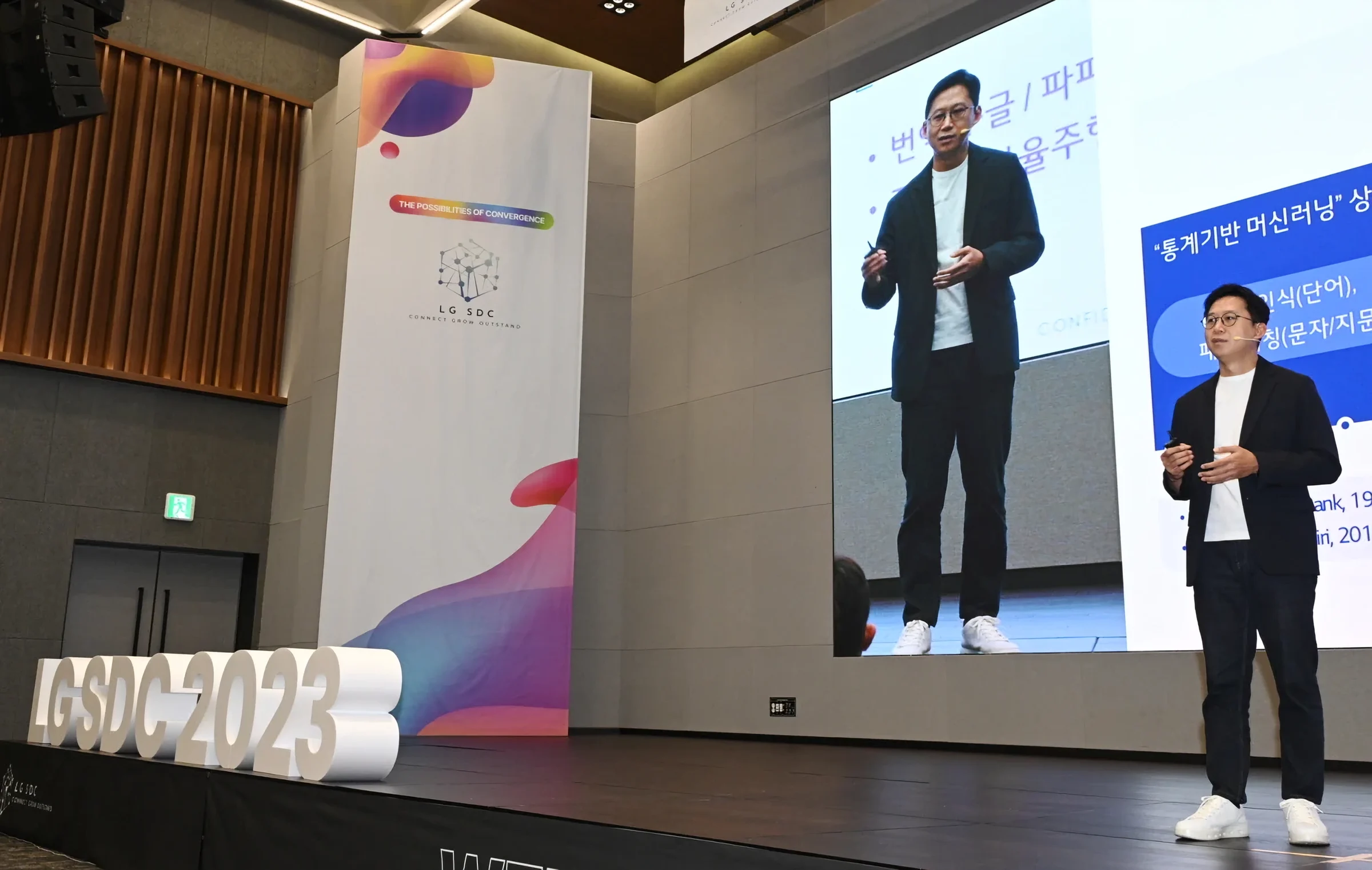
July's adoption followed months of testing and installation at Koreit Tower. An LG U+ appliance and later EXAONE software support carried the relationship beyond the first benchmark.
On 22 July 2025, FuriosaAI announced that LG AI Research had adopted RNGD after months of performance, power and software testing. Hardware was installed at LG's Koreit Tower data centre. The supplier reported 2.25 times better inference performance per watt than its tested GPU alternative, alongside LG's latency and throughput requirements.
Jeon's team had selected an accelerator for models it was already developing, then worked with Furiosa on the serving system around it. The choice subsequently appeared in an LG enterprise offering and an appliance with LG U+. As EXAONE developed, Furiosa kept adding the compiler, scheduling and cache support needed to run newer versions on RNGD.
The original comparison concerned useful inference inside a power budget. RNGD's proposed route used air-cooled servers in facilities already equipped for conventional racks. The later appliance added LG U+'s enterprise platform to that hardware and LG's model. Those decisions concentrated on deploying the whole system in a customer's environment, while the first installed reference supplied practical experience for the continued work.
Jeon's Team Had Tested the Workload Before Choosing the Accelerator
Kijeong Jeon, identified as LG AI Research's Product Unit lead in the announcement, described extensive comparison of alternatives before selecting RNGD. He pointed to performance, cost and straightforward integration. Furiosa's account traces the work to an evaluation plan announced two years earlier, followed by customer sampling after RNGD's public debut.
LG tested 7.8B and 32B versions of EXAONE 3.5 with different context lengths. After installation at Koreit Tower, the teams scaled serving from one card to two, four and eight, applying tensor parallelism across cards. They optimised PCIe peer-to-peer communication and overlapped inter-chip data transfers with computation. The work concerned running LG's models as a responsive service, not just reaching an isolated chip score.
Furiosa's reported four-card test illustrates the workload: EXAONE 3.5 32B generated 60 tokens per second at a 4K context and 50 at 32K, with a batch size of one. Its serving framework also supplied an OpenAI-compatible API, Prometheus monitoring and Kubernetes integration. LG's model and product teams could place the accelerator inside a recognisable service environment while changing the hardware underneath.
Reported Metrics
- Reported performance per watt: 2.25x. Supplier-reported performance-per-watt comparison of LG's tested EXAONE workloads against its GPU-based alternative. Source 1
The Adoption Appeared Inside LG's Wider Enterprise Offer
The same day, LG held its AI Talk Concert. Its subsequent account names co-heads Woohyung Lim and Honglak Lee and AI Agent Group head Jungkyu Choi presenting a wider ecosystem of models, data tools and services. The on-premise package addressed companies wanting generative AI inside their own networks, with configurations supporting GPUs and NPUs.
Furiosa chief executive Joonho Baek attended and described the two teams' work on inference speed and energy efficiency for the on-premise offering. FriendliAI demonstrated a separate hosted API route, while the Furiosa relationship sat on the locally operated side of the offer. LG was presenting several ways to deliver its technology, not simply endorsing a chip in isolation.
On 30 July, Furiosa announced a US$125 million Series C bridge round intended to scale RNGD production and development. That financing followed the adoption announcement by eight days. The sequence matters: the installed LG reference preceded the new production financing, while a broader enterprise offer was being assembled around the model and hardware.
- LG AI Research / July22 event, named teams and Furiosa on-premise partnership
- FuriosaAI / subsequent funding and design-win follow-through
LG U+ Put the Combination Into an Appliance in March
The next packaged product was announced on 4 March 2026 at MWC. LG U+ and Furiosa introduced a Sovereign AI Appliance combining RNGD, EXAONE 4.0 and the ixi-Enterprise platform. Chief technology officer Lee Sang-yeob described moving enterprise users from cloud-based services to an isolated local installation. The package was designed to run a complete retrieval-augmented generation workflow without external cloud API calls.
The reference configuration used two servers and fourteen RNGD cards, with support for 32K context and document workloads. A visual parser and embeddings worked alongside EXAONE to handle the document-based workflow. That broadened the original model-serving reference into a packaged enterprise system.
The partnership gave each organisation a defined place in that package: Furiosa's accelerator, LG AI Research's model and LG U+'s enterprise software. A business could install the combined hardware and software package inside its own network. The companies also outlined NPU-as-a-service and physical-AI appliances as further development directions.
Software Releases Continued the Work After the Hardware Was Installed
Furiosa's 30 April 2026 SDK release returned to the deployment work. Model-specific presets reduced compilation tuning, while cache-aware routing sent a request towards a serving replica that already held its prompt prefix. That avoided repeating work across replicas. Furiosa reported a 74.9% average throughput improvement for the tested Qwen3 and EXAONE 4.0 families against its previous SDK release.
October's fourth major SDK release added EXAONE 4.5 support and changed how vision-language requests were handled. They moved onto the standard first-come, first-served scheduler with continuous batching. Host-side image preparation could overlap inference, and image embeddings could be reused across turns and parallel workers. The software was adapting the installed accelerator to a growing mix of requests.
The same release completed a move to Furiosa Executable Bundles. These held precompiled kernels and metadata separately from the model weights, allowing compatible fine-tuned models to reuse the kernel package. Serving machines no longer had to compile those kernels locally. It was a deployment change that connected the compiler team's work with the people loading models into a service.
Experimental hierarchical caching extended beyond NPU memory to host memory and, through Mooncake, shared storage. It remained off by default and required compatible infrastructure. Alongside the standard scheduler and bundle changes, this gave operators a further testing route as the model catalogue expanded. The LG relationship had continued from evaluation and installation into an enterprise appliance and the software needed for later EXAONE generations.
- Furiosa / SDK2026.2 EXAONE improvements and deployment features
- Furiosa / SDK2026.4 new EXAONE support, caching and precompiled bundles
The 2.25-times comparison applies to the supplier's tested LG workloads and GPU alternative. It is not a result for every model or deployment.
Primary Sources
- FuriosaAI / LG adoption and test description (2025-07-22)
- LG AI Research / July22 event, named teams and Furiosa on-premise partnership (2025-08-01; event 2025-07-22)
- Furiosa / LG U+ appliance launch and Lee Sang-yeob (2026-03-04)


