DSML Market Views Article
KKR and IMM Agree to Invest KRW 3.08 Trillion in SK Telecom's Planned Data-Centre Company
A proposed KRW 3.08 trillion equity investment puts an ownership structure around eight operating centres and new construction. Earlier Gasan and Ulsan decisions explain the services and partnerships behind that expansion.
Kim Seong-Soo Is Given a Larger Infrastructure Job
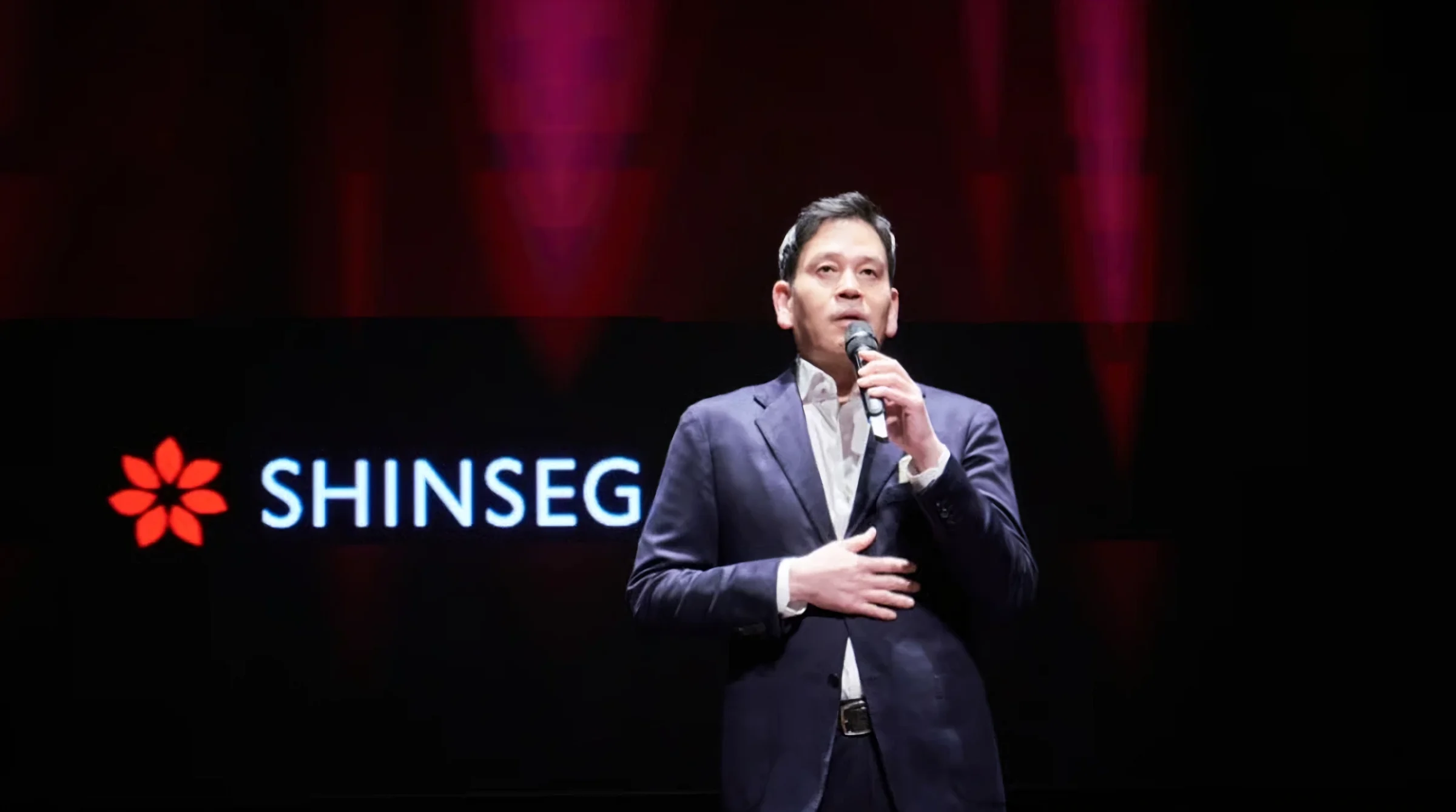
SK Broadband chief executive Kim Seong-soo was expected to lead a new company as well as the existing business under SK Telecom's 27 August 2026 restructuring plan. SK Horizon would take the data-centre and submarine-cable operations, supported by a definitive agreement for KRW 3.08 trillion of equity investment from KKR-managed funds and the IMM Investment-Stonebridge consortium.
The operating foundation comprised eight centres, including Gasan, Pangyo and the two Ilsan locations. With Ulsan and Guro under construction, the planned network would expand to 318 MW. After all investment phases, SK Telecom would retain 51%, KKR 29% and the IMM consortium 20%. Establishment was targeted for the first quarter of 2027, subject to shareholder and government procedures.
Kim described the reorganisation as a way to strengthen expertise and accelerate decisions. KKR partner Keith Kim pointed to the combination of operating assets, development capacity and a strategic shareholder. The agreement joined outside infrastructure investors to an operator already managing sites.
SK Telecom also allocated different responsibilities across its organisation. It would set overall strategy and work with global technology partners; SK Horizon would operate and expand infrastructure; the separately established SK Hyper would develop larger new projects. The proposed split gave the network's next phase identifiable managers and capital partners.
Huang and Bae Put Computing Into Korea's Industrial Programme
The ownership plan followed a much larger national announcement. At the October 2025 APEC summit, NVIDIA described more than 260,000 GPUs across Korean public and private programmes. Samsung, SK and Hyundai each planned around 50,000, while NAVER Cloud planned more than 60,000.
Jensen Huang connected accelerated computing to Korea's manufacturing history. Deputy Prime Minister Bae Kyung-hoon framed the programme as reinforcement of existing industrial strengths. The planned public infrastructure would also give research institutes, start-ups and AI companies access to computing through Korean cloud providers and the National AI Computing Center.
The rollout was to develop over several years, beginning with 13,000 Blackwell and other GPUs through NAVER Cloud, NHN Cloud and Kakao. It combined work inside large manufacturers with access for organisations that needed a shared service. The national scale attracted attention, but the participants had different jobs to perform: training an industrial model, running an application for a customer or supporting a research team. The following company decisions show how those jobs were being organised.
Samsung Speeds Up a Particular Step in Making Chips
Samsung's 31 October 2025 announcement supplied an achieved manufacturing result alongside its larger plan. Using NVIDIA cuLitho and CUDA-X in optical proximity correction, it reported twentyfold computational-lithography performance. The calculation predicts and corrects circuit-pattern variation before wafer production; the reported gain concerns that task.
The companies' relationship had begun more than twenty-five years earlier with memory for graphics cards and extended into foundry work. The new programme connected NVIDIA computing to Samsung's knowledge of chip design, equipment and production. Its planned AI factory would use more than 50,000 GPUs across semiconductor manufacturing, mobile products and robotics.
Digital twins were another part of the offer. Samsung was building virtual fab environments to examine anomalies, maintenance and proposed changes before applying them physically. It planned to extend the infrastructure to manufacturing hubs including Taylor in the United States. The lithography result gave a concrete reason for those investments: a demanding calculation within an existing industrial process could be completed faster, while the broader virtual-factory programme addressed other production decisions.
Gasan Opens With Lambda
The service business was already taking shape before APEC. SK Telecom's February 2025 results confirmed that Gasan had opened with Lambda the previous December, alongside the introduction of SKT GPU-as-a-Service. Developers could obtain computing through an operator instead of assembling a complete installation.
The release reported annual data-centre revenue of KRW 397.4 billion, up 13.1%, with higher operating rates at newer centres including Gasan. CFO Kim Yang-seob described the next stage as commercialising AI while strengthening the telecommunications business. The network brought experience in serving customers into the newer GPU offer.
SK had invested in Lambda and signed an investment contract with Penguin Solutions before setting out this expansion. It planned further joint research, commercialisation and work on next-generation memory appliances with Penguin. The partnerships combined access to computing with the systems expertise needed to operate a larger network.
Chey Tae-Won Adds AWS to the Ulsan Programme
In June, SK signed a fifteen-year Ulsan partnership with AWS. Chey Tae-won and AWS infrastructure executive Prasad Kalyanaraman joined the 20 June ceremony. SK would lead data-centre construction and AWS would establish an AI Zone, with operations expected in 2027.
The planned service combined computing with familiar AWS tools including SageMaker, Bedrock and Amazon Q. Ulsan offered SK's gas supply, energy capabilities, sites and a suitable submarine-cable environment. The design included dense racks and combined air and liquid cooling.
These are decisions about the whole service surrounding the processors. Gasan introduced an operating offer; Ulsan brought a cloud partner and construction timetable. The later SK Horizon agreement would give expansion a dedicated organisation and investors. Korea's infrastructure story is taking shape through those businesses and the work they can deliver to customers.
SK Telecom is organising AI infrastructure through operating companies, investors and cloud partners. Gasan supplies an existing service, Ulsan a construction programme and SK Horizon a proposed organisation for expanding the network.