DSML Market Views Article
Samsung Biologics Separates Bioepis to Address Potential Conflicts With Drugmaking Clients
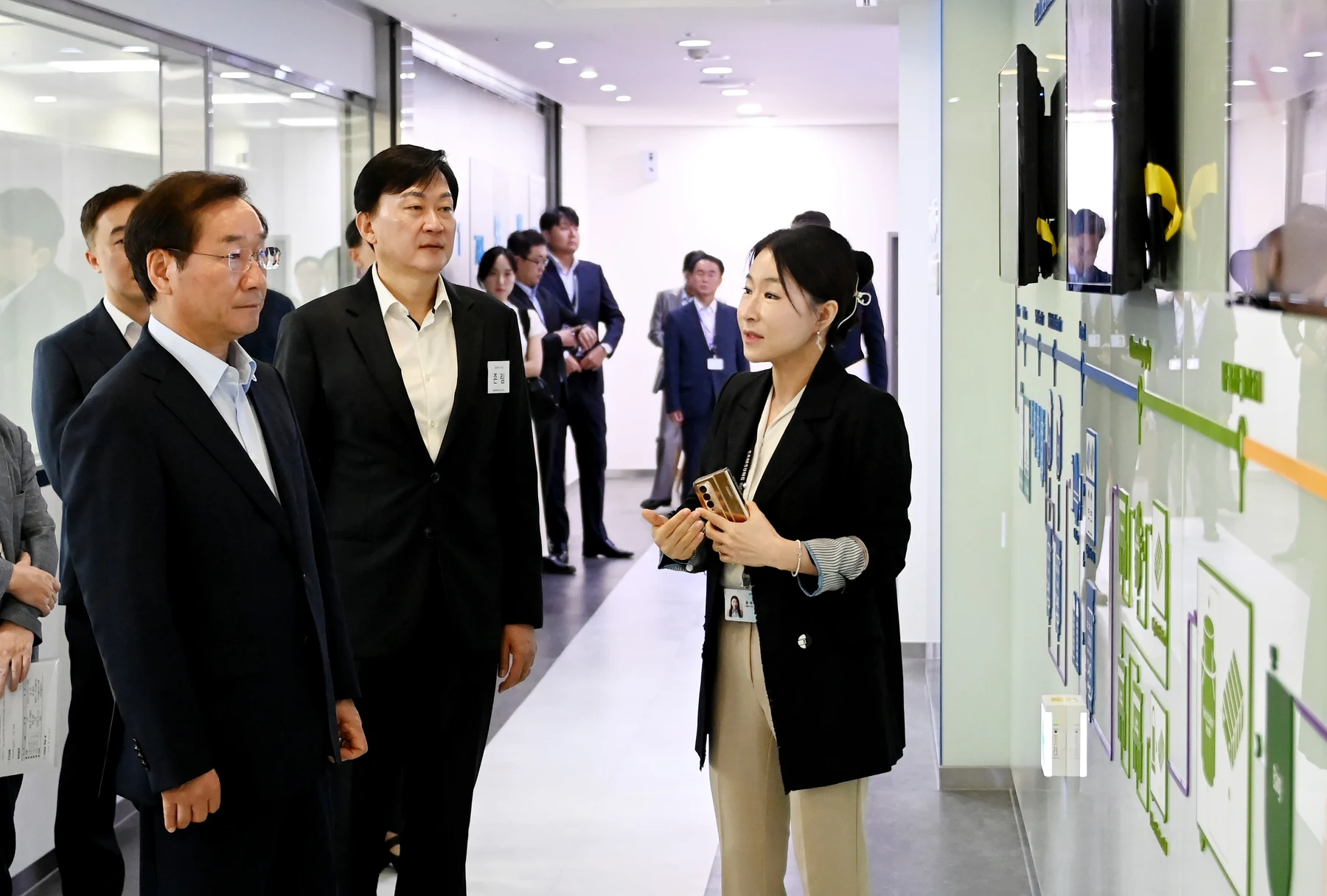
John Rim separated contract manufacturing from a potentially competing product business. Kyung-Ah Kim took charge of Epis Holdings, while the two organisations pursued different expansion programmes.
Samsung Biologics announced its equity spin-off plan on 22 May 2025. Shareholders approved the separation on 17 October, and Samsung Epis Holdings was established on 1 November 2025, according to the subsequent quarterly filing. Samsung Biologics reported FY2025 CDMO revenue of KRW 4,557.0 billion and operating profit of KRW 2,069.2 billion on a post-spin-off basis.
John Rim's board chose to separate two businesses that had increasingly different relationships with the pharmaceutical industry. Samsung Biologics manufactured medicines for customers; Samsung Bioepis developed biosimilars that could compete with those customers' products. The May announcement made that potential conflict the central reason for the split. Completion changed the ownership structure behind a promise of manufacturing neutrality, while giving each business a more distinct investment programme.
The FY2025 figures imply a CDMO operating margin of 45.4%, calculated from 2,069.2 divided by 4,557.0. That manufacturing business provided the base for Rim's next investments in sites and services. Kim's separate organisation would develop biosimilars and pursue new therapeutic technologies, making the different uses of capital more visible.
Potential Customer Conflict Reached the Board
The 22 May announcement did not present the split as an exit from biotechnology. It described a decision to concentrate two different biotechnology businesses. Contract development and manufacturing would remain with Samsung Biologics; a new holding company would own Samsung Bioepis in full. Bioepis chief executive Kyung-Ah Kim was expected to lead the new holding company as well.
Samsung explicitly said it wanted to dispel potential customer concerns about a CDMO operating a competing biosimilar business. That is a particularly relevant issue for a manufacturer whose clients entrust it with medicine-development and production work. The commercial relationship asks the customer to treat its supplier as an extension of its own operations, even when the supplier's wider group may pursue products in the same market.
Rim also linked the decision to faster, more focused management in a changing trade and drug-pricing environment. The structural answer was specific: separate the businesses instead of asking one company to sustain both propositions indefinitely. It gave the manufacturing sales team a simpler explanation of whose interests its operating business served.
The Final Separation Came After the Original October Plan
May's timetable anticipated an October establishment date. The completed transaction followed a later schedule. The Q1 2026 filing records shareholder approval on 17 October 2025 and the formation of Samsung Epis Holdings through the equity spin-off on 1 November. Bioepis and the product-development business left Samsung Biologics' reporting perimeter.
The November completion announcement reported 99.9% shareholder support for the proposal. Owners would hold interests in the two separate companies, with trading scheduled to resume on 24 November. The five months after the board decision had involved a prospectus, regulatory procedures and shareholder consent before the new structure could take effect.
Kim's establishment announcement on 3 November supplied the other side of that change. Bioepis would remain a wholly owned subsidiary of Epis Holdings, continuing its development, manufacturing and distribution of biosimilar medicines. The holding company would seek investments in new therapeutic technologies. Independence was being used to organise another growth programme, as well as to simplify Rim's manufacturing proposition.
- Samsung Biologics / board decision and equity spin-off plan
- Samsung Biologics / Q1 2026 filing, completed spin-off and share count
- Samsung Biologics / completed separation and shareholder approval
- Samsung Epis Holdings / establishment and Kyung-Ah Kim's investment programme
Kim's Organisation Made Its Own Research Choice
On 11 November, Epis Holdings announced Epis NexLab, a wholly owned subsidiary for next-generation biotechnology platforms. Peter Seongwon Hong would lead it alongside his role heading research and early development at Bioepis. The announcement identified amino-acid and peptide-conjugate technologies among the areas to explore, with potential licensing or joint development of drug candidates.
Hong linked that programme to the research experience accumulated while developing biologics at Bioepis. The new organisation gave that experience a separate route beyond the established biosimilar portfolio. Kim's holding company and Rim's CDMO were consequently using the separation for different purposes: one could organise product and platform development, while the other concentrated on manufacturing services for pharmaceutical customers.
- Samsung Epis Holdings / establishment and Kyung-Ah Kim's investment programme
- Samsung Epis Holdings / Epis NexLab and Peter Seongwon Hong's role
The Factories Supplied a Manufacturing Baseline
The January 2026 results gave the new manufacturing perimeter a full-year baseline. FY2025 revenue was KRW 4,557.0 billion and operating profit KRW 2,069.2 billion. Samsung labelled the table as consolidated CDMO earnings on a post-spin-off basis, with comparatives for the same business. That made the underlying manufacturing growth visible without blending in Bioepis's product sales.
Rim attributed the year's delivery to consistent operations and demand. Plants 1 through 3 were fully utilised, and Plant 4 reached full utilisation in the third quarter of 2025. Installed facilities were processing customer programmes at greater scale. The manufacturing results showed what the plants and teams had delivered during the year that the board pursued separation.
The results also described preparations beyond the large antibody plants. Samsung was planning a fully automated prefilled-syringe drug-product line and had secured land for Bio Campus III. These investments concerned how customers' medicines would be made and finished. Manufacturing specialisation still left room for new technologies and services within the business.
- Samsung Biologics / FY2025 results on post-spin-off CDMO basis
- Samsung Biologics / Q1 2026 filing, completed spin-off and share count
Manufacturing Focus Did Not Mean Standing Still
By July 2026, Samsung was integrating its acquired Rockville site into the network and progressing Plant 5 qualification. The CDMO's identity had become more focused while its operating footprint was becoming broader. Korean manufacturing scale and American local production were being assembled within the same service proposition.
The October update said both Plant 5's ramp-up and Rockville contributed to revenue. It also described a planned acquisition of PolyPeptide to add peptide development and manufacturing. That is diversification within contract services, distinct from returning to the ownership of a biosimilar product competitor. The proposal remained an acquisition in progress, despite meeting the tender offer's acceptance condition.
- Samsung Biologics / Q2 2026 CDMO-only performance
- Samsung Biologics / Q3 2026 results and planned capital raising
Shareholders Face a New Funding Decision
On 21 October 2026, Samsung announced a planned KRW 3 trillion rights offering to finance strategic investments, including PolyPeptide and future capacity. Existing-shareholder subscriptions were scheduled for November, followed by an offer of any unsubscribed shares to the public. The proposal placed a new funding choice before the owners after the separation.
The lasting commercial case for the split is customer confidence combined with more accountable spending. Samsung can now explain its service strategy without Bioepis's product competition inside the same company. It still has to turn newly purchased sites, added capacity and unfamiliar modalities into useful customer work. Neutrality helps open the conversation; reliable delivery and sensible expansion determine what that conversation earns.
- Samsung Biologics / Q3 2026 results and planned capital raising
- Samsung Biologics / board decision and equity spin-off plan
The customer-conflict rationale is credible, but Samsung has not quantified orders previously lost because it owned Bioepis. Strong manufacturing results cannot by themselves measure the spin-off's incremental benefit. The structural change and the factory performance are complementary developments, not interchangeable explanations.
Primary Sources
- Samsung Biologics / Q2 2026 CDMO-only performance (2026-07-23)


