DSML Market Views Article
Samsung Biologics' New 180,000-Litre Plant 5 Begins Contributing Revenue
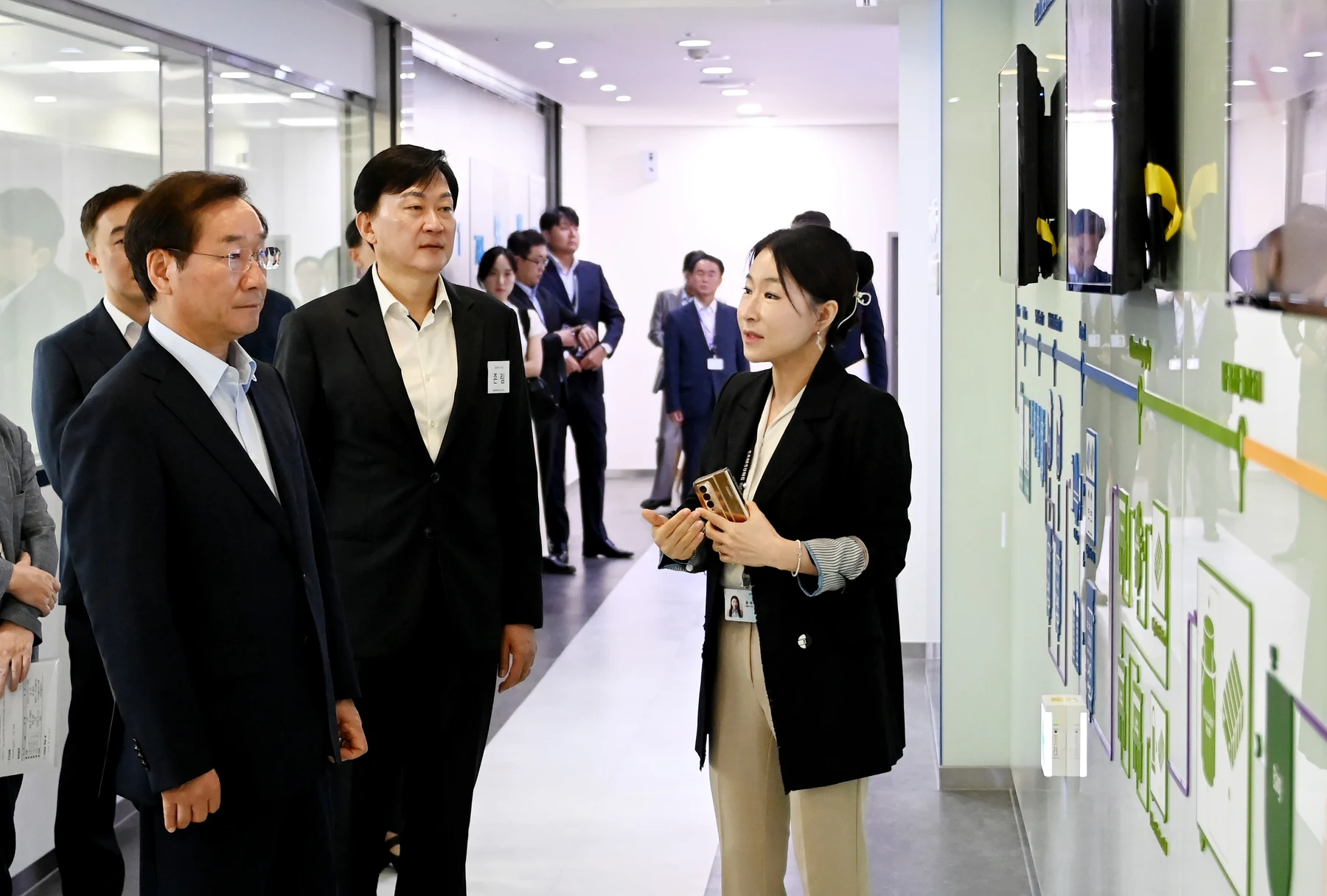
John Rim opened Plant 5 in April 2025 as Samsung extended automation across its next manufacturing campus. Customer-process qualification followed, and the company reported increasing revenue contributions in Q3 2026.
Samsung Biologics began operating Plant 5 in April 2025, adding 180,000 litres of manufacturing capacity. Its July 2026 update described growing process-performance qualification activity, followed by increasing revenue contributions reported in October.
Plant 5 carried Samsung's manufacturing expansion into a second Songdo campus. Rim's team combined another large production facility with digital production records and site-wide automated logistics, then worked through customer-process qualification. By October 2026, the plant was contributing revenue while the four older plants were fully utilised. The expansion was becoming an operating business just as Samsung prepared its next round of investment.
Samsung's Q3 2026 CDMO revenue reached KRW 1,490.3 billion, against KRW 1,257.5 billion a year earlier. Operating profit increased from KRW 633.5 billion to KRW 640.1 billion. Plant 5 and the newly acquired Rockville site both contributed to the larger network, although their individual earnings were not itemised.
Rim Took the Expansion Into a Second Campus
In April 2025, John Rim told shareholders that Samsung Biologics had started operations at Plant 5. The chief executive described a facility equipped with a manufacturing execution system that replaced manual workflows, alongside automation intended to improve working conditions and production reliability. Construction had delivered the next building; the operating team now had to bring customer programmes into it.
The opening added 180 kL, equivalent to 180,000 litres, of manufacturing capacity. It also began a new phase of Samsung's Songdo development as the first plant of Bio Campus II. In July, Rim described Plant 5 as fully operational and placed it alongside the company's widening services, including antibody-drug conjugate manufacturing and newly introduced organoid research. Samsung was expanding both the amount of work it could accommodate and the stages of drug development it could support.
That combination mattered to its customers. A pharmaceutical company developing a medicine needs a manufacturer able to support an evolving programme, not just reserve equipment. Samsung's decision joined the new facility to an existing development and manufacturing organisation, giving the expansion a commercial route through relationships and technical work already under way.
Lee Extended Automation Beyond the Warehouse
Changgeun Lee, associate director of Plant 5 logistics, explained the change in Samsung's May account of the site. Plant 4 had introduced automated storage and retrieval in 2022. The newer plant extended logistics automation across the site, using autonomous mobile robots to move supplies and samples through the central manufacturing support building.
People and robots had separate routes. Sensors monitored material movement, while lifts, conveyors and electronic pallet trucks helped handle supplies. A robot arm for sorting and disinfection was still a planned addition. Lee's distinction between automated storage and automated plants captured the ambition: the movement of materials was becoming part of the manufacturing system itself.
The purpose was consistent production: supplies, samples and their records had to follow the customer's process through the facility. Bringing those activities together could reduce manual handovers and give customers clearer information about their programmes. Samsung presented the design as a way to support reliable execution.
For staff, this changed the organisation of work as well as the machinery around them. Rim's April description emphasised replacing manual workflows with digital manufacturing infrastructure and improving workplace safety. The investment therefore involved operating procedures and information flows alongside the bioreactors. It was an attempt to reproduce Samsung's established manufacturing capabilities on a larger and more integrated site.
- Samsung Biologics / Plant 5 operating design and site-wide logistics automation
- Samsung Biologics / CEO operating update
Customer Processes Followed the Opening
While Plant 5 was opening, Samsung was still filling its previous expansion. The July 2025 results described Plant 4 as ramping up. By January 2026, the company reported that Plant 4 had reached full utilisation in the third quarter of 2025, joining Plants 1 through 3. The older expansion had become part of a fully occupied operating base.
Samsung then expected Plant 5 to begin contributing revenue during 2026. Its July update described increasing Process Performance Qualification activity at the new facility. This is the work of qualifying the manufacturing process that will run there, connecting a completed factory to the requirements of a customer's medicine. The dated progression explains why an operating start and a subsequent commercial ramp were separate steps.
The outcome appeared in October's third-quarter results: Samsung reported increasing revenue contributions from Plant 5 as production built up. Plants 1 through 4 remained at full capacity. The sequence had moved from opening a facility, through preparing customer processes, to generating manufacturing revenue.
Plant 4's experience helped make the next expansion commercially credible. It showed Samsung had recently brought a major addition into full use. Plant 5's own progress then gave the company another source of growth beyond the occupied older factories. For customers planning future supply, that matters as much as the immediate addition of tank volume: the network was developing room for the next set of programmes.
- Samsung Biologics / Q2 2025 results and Plant 5 capacity
- Samsung Biologics / FY2025 results and Plant 5 outlook
- Samsung Biologics / Q2 2026 CDMO results and new-site ramp
- Samsung Biologics / Q3 2026 results, Plant 5 and Rockville revenue contribution
The Next Expansion Was Already Taking Shape
The new plant entered commercial service during a wider change in Samsung's business. Following the separation of the biosimilar operation, the January 2026 results described its direction as a pure-play CDMO. Rim's October statement linked further investment to more diverse pharmaceutical pipelines and increasingly complex supply requirements. Manufacturing capacity and the range of services offered were being developed together.
October also brought a proposed step into peptide therapeutics. Samsung reported 87.92% participation in its PolyPeptide tender offer, satisfying the acceptance condition while the acquisition remained planned. It announced a KRW 3 trillion rights offering to support that transaction and future manufacturing expansion, with existing-shareholder subscriptions scheduled for November. The next programme therefore combined a broader scientific portfolio with another request for capital.
Plant 5 supplies the recent operating history behind that programme. Samsung had built the facility, introduced a more automated working system, qualified customer processes and begun reporting revenue contributions. That is a stronger commercial result than construction alone. The next challenge is to sustain that progression across a business adding both new locations and new kinds of manufacturing work.
- Samsung Biologics / FY2025 results and Plant 5 outlook
- Samsung Biologics / Q3 2026 results, Plant 5 and Rockville revenue contribution
Plant 5's progress now rests on customer production. As Samsung expands into further sites and modalities, it will also have to maintain the consistency and quality that helped fill its older factories.
Primary Sources
- Samsung Biologics / CEO operating update (2025-04-23)
- Samsung Biologics / second-quarter business update (2025-07-23)


