DSML Market Views Article
Diplomacy SuperWeek India, Vietnam, Germany, Middle East; Korea Establishes New Axes
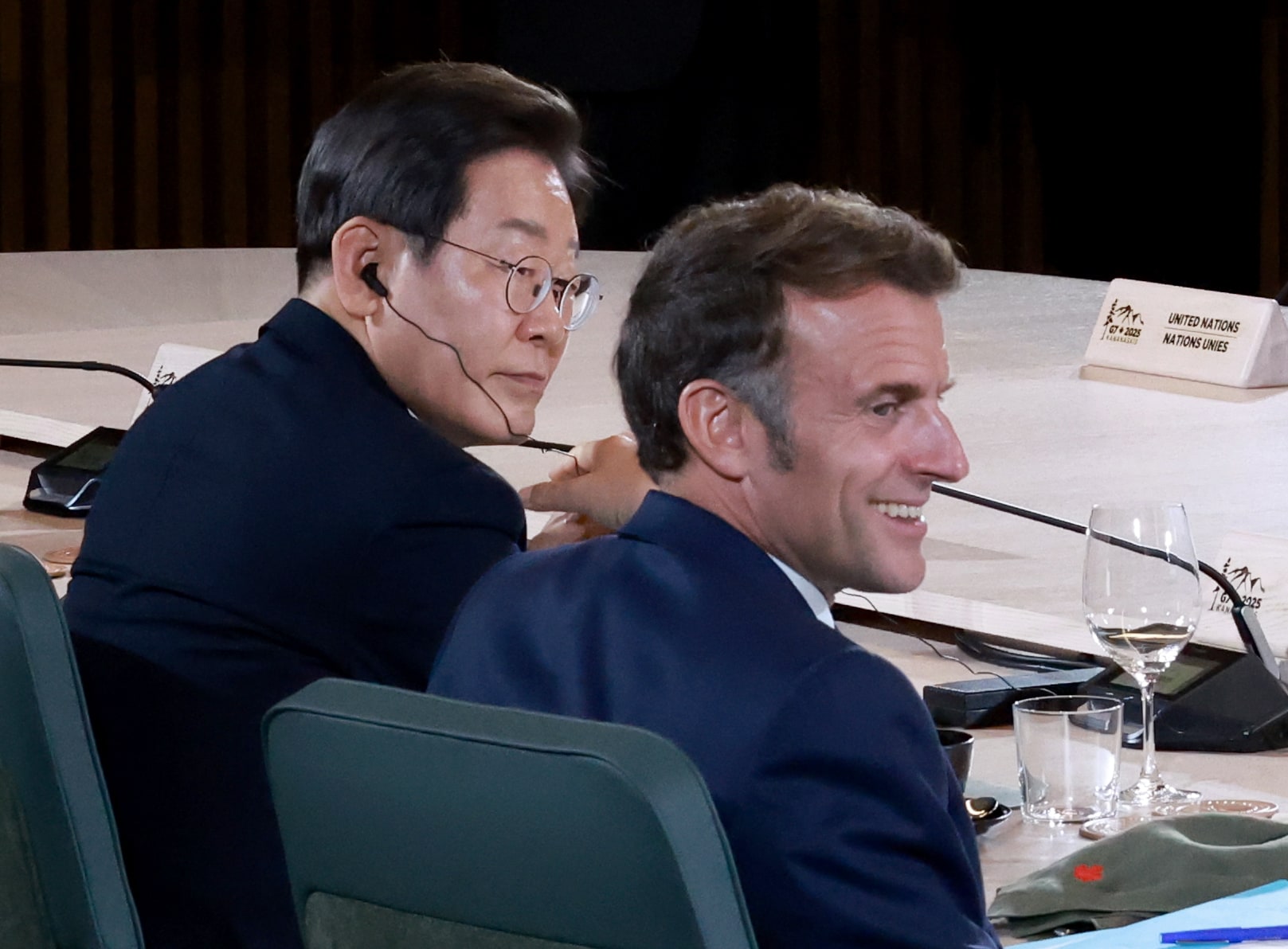
On April 19, 2026, President Lee Jae-myung undertook an eight-year-interval India state visit, heading toward summit meetings with Prime Minister Modi.
India State Visit After Eight Years
On April 19, 2026, President Lee Jae-myung undertook an eight-year-interval India state visit, heading toward summit meetings with Prime Minister Modi. India, as the world's largest democracy with 1.4 billion population and highest growth prospects as the world's third-largest economy by 2030, represents a transformative engagement. The Korea-India relationship has historically suffered from unrealized potential relative to capacity. Trade volume between India and Korea significantly trails Japan, China, and the United States. However, this relationship encounters transformation catalysts. Korean enterprises' technologies emerge as core partners in India's semiconductor industry cultivation policy, AI infrastructure investment, and renewable energy transition. Samsung, Hyundai, and LG's India market share rapidly expands while Indian youth interest in Korean culture surges. Should summit meetings establish targets for substantially expanding trade volume through 2030, this opens an official high-speed route to a 1.4 billion person market for Korean enterprises.
Vietnam: Critical Supply Chain Restructuring Hub
Vietnam accompanies India as a principal visit destination. Korea-Vietnam relations already possess substantial density. Samsung Electronics Vietnam constitutes approximately 20% of Vietnam's aggregate exports. Korea ranks among Vietnam's largest foreign investors. This summit's agenda advances further. Amid US-China trade conflict and supply chain restructuring, Vietnam emerges as the "China-plus-one" strategy's critical hub. Korean enterprises, reducing China dependence while diversifying Southeast Asian production bases, naturally select Vietnam. Government diplomacy here establishes infrastructure enabling this private sector momentum.
Energy supply chains warrant mention. Amid heightened energy security concerns from Middle East conflict, Southeast Asia LNG supply network strengthening particularly involving Vietnam constitutes summit dialogue core elements.
Macron and AI, Scholz and Semiconductor Supply Chains
Concurrently, French President Macron visited Korea. AI and Middle Eastern challenges framed cooperative agenda discussions. Potential Korea participation at G7 summit meetings grew more concrete through this engagement. Formal G7 participation or sustained invitee status elevates Korea's geopolitical stature substantially. During meetings with former German Chancellor Olaf Scholz, automotive semiconductor supply chain cooperation was confirmed. As German automobile industry undergoes electrification, Korea's battery and semiconductor technology became essential partnership. Germany's formal "Climate Club" participation provides foundation for Korea-EU cooperation regarding Europe's carbon border adjustment mechanism (CBAM) response.
Middle East Ceasefire and Global Liquidity
US President Trump formalized unprecedented Israel-Lebanon leadership dialogue, with short-term ceasefire agreements imminent. Market impact proved immediate. Safe-asset preference moderated; risk-asset preference revived. Geopolitical risk premium reduction influences global capital allocation. Sustained Middle East conflict entails commodity price increases and supply chain anxiety, stimulating inflation and dampening rate cut expectations. Ceasefire achievement alleviates these concerns, reviving rate cut expectations and strengthening risk-asset preference. KOSPI 6,200 recovery partially reflects geopolitical risk moderation.
Strategic Significance of Global South Diplomacy
Defining the India-Vietnam visit as "Global South diplomacy's full-scale commencement" transcends mere expression. It declares Korea's diplomatic strategy evolution from traditional US-Japan-Europe orientation toward multipolar structure incorporating India, Southeast Asia, and Middle East. This strategic shift directly connects to economic opportunity. India, Vietnam, Indonesia, Saudi Arabia, UAE these nations anticipate most rapid growth during forthcoming 10-20 years. Should Korea establish presidential-level trust with these nations, that trust becomes infrastructure for private enterprises' market entry and capital flows. From culture asset investment perspective, diplomatic expansion extends K-culture distribution geography. Tens of billions of young population across India and Southeast Asia constitute potential K-culture consumers. Diplomatic trust lowers culture content local market entry barriers.
The Economic Imperative of the Global South
Diplomatic pivots of this magnitude are leading indicators for massive capital realignments. By institutionalizing ties with the Global South, Korea is mitigating its dependency on traditional geopolitical axes while opening vast, structurally young demographic markets to Korean tech, infrastructure, and cultural exports. The true ROI of this 'SuperWeek' will manifest in the ensuing decade's bilateral trade metrics.