DSML Market Views Article
NAVER Takes Robot Food Deliveries From Its Headquarters to a Tokyo Office Building
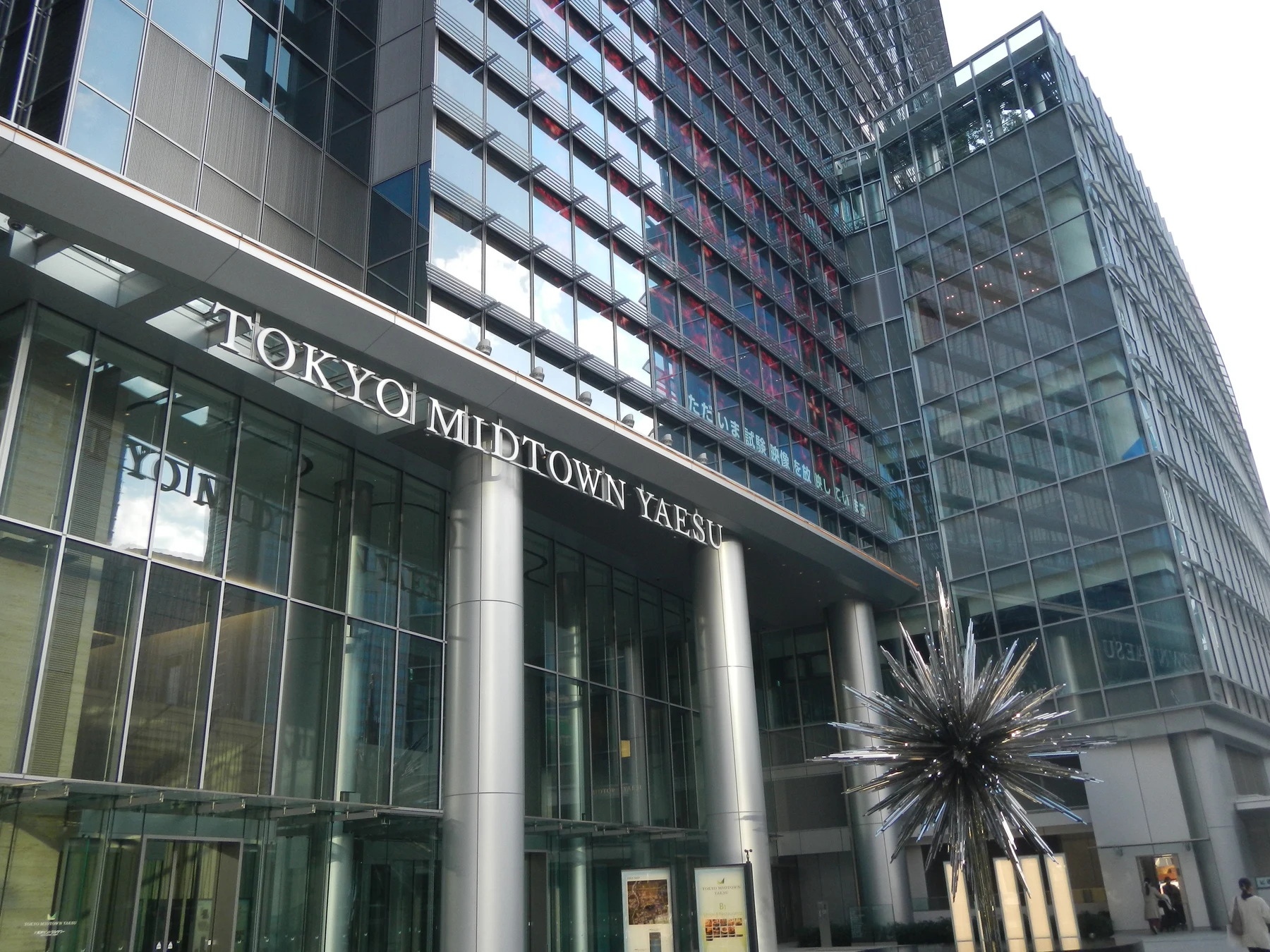
A Tokyo food-delivery service grew out of NAVER's purpose-built Korean headquarters and an earlier Japanese digital-twin trial. Mitsui Fudosan, NTT EAST and NAVER divided the work needed to move from experiments to an operating service.
Lunch Travels From Two Restaurant Floors to a Seventh-Floor Office
An office worker at Tokyo Midtown Yaesu could order through LINE and have food brought upstairs by robot under the service announced on 21 July 2026. Four delivery robots connected participating restaurants on the basement and fifth floors with Work Styling on the seventh. Mitsui Fudosan, NTT EAST and NAVER Cloud had taken an ordinary building task, moving a prepared order to its recipient, and divided responsibility for making it work.
NAVER's account two days later called this the first commercial deployment of its 1784 smart-building model beyond its own headquarters. That was a more demanding achievement than demonstrating a robot in a laboratory. The service had to fit another owner's premises and another operator's routines. Its small, defined route made the transition intelligible: a system developed inside NAVER was now helping restaurants serve office users in a Japanese property.
- Mitsui Fudosan / Tokyo Midtown Yaesu joint service, fleet and division of work
- NAVER / external deployment of the 1784 operating model in Japan
Sangok Seok Describes a Building Changed While It Was Being Built
The origins lay in an unusual property decision. In a July 2024 account, NAVER LABS chief executive Sangok Seok recalled redesigning NAVER's second headquarters while construction had reached the fifth floor. The company wanted a place where robots and employees could share everyday space, so it changed the design and facilities around that purpose. The resulting 1784 headquarters opened in 2022. Seok explained why NAVER had made the building its own experimental environment: engineers needed room to try things without constantly negotiating with a separate building owner. His account also traced a technical choice back to the M1 mapping robot, unveiled in 2016. Instead of requiring every service robot to build its own understanding of a space, NAVER developed maps that several robots could use. The investment joined the physical workplace to the research programme. Coffee and parcel deliveries would give engineers problems a staged demonstration could avoid.
By April 2025, the Experiment Had a Delivery History
NAVER LABS' 11 April 2025 review of 1784 reported more than 60,000 completed deliveries and around 100 robots serving a building used by over 3,000 employees. The tasks included cafe orders, convenience-store items, parcels, lunch boxes and personal-item exchanges. The variety gave the research a practical character. A parcel and a prepared lunch are different service requests even if a robot follows part of the same route. NAVER's cloud-based ARC system coordinated movement and connected the fleet to the building's services. Repeated use created experience with real destinations and real users. The company's asset was becoming the accumulated ability to organise those tasks, alongside the machines themselves.
Mitsui and NTT Had Already Begun Work at Yaesu
The Japanese site also had a history before the July 2026 announcement. On 17 January 2025, Mitsui Fudosan and NTT EAST announced a digital-twin trial on Tokyo Midtown Yaesu's fourth and fifth floors. Mitsui oversaw the trial and provided the operating environment. NTT was responsible for building the local 5G, digital-twin and robot-delivery systems and developing an augmented-reality application.
The trial combined three-dimensional point-cloud information with images in a cloud-based representation of the premises. Delivery and indoor navigation were among its proposed uses. A shared map could be updated for the fleet, while connections to security and lift controls would let robots move between floors. It gave the Japanese partners experience with the premises and their equipment before the three-company launch, complementing NAVER's experience of running robots in Korea.
The Engineers Describe Congestion and Lift Calls, Not Just Navigation
NAVER LABS' 29 May 2026 account of ARC identified a Tokyo Midtown Yaesu pilot with NTT EAST among its overseas projects. It described the operating problems that emerge when several robots share a building: bottlenecks, allocation of lift calls and safer routes during busy periods. Sensor information, spatial information and service results were being connected so recurring exceptions could inform further development.
That account explains what the four years at 1784 contributed. Knowing a route is only part of delivery; the system also has to coordinate access and timing. A robot that can reach a lift but cannot use it at the appropriate moment has not completed the job. The engineers were carrying experience of these interactions into other environments. Their work linked the research organisation to the service organisation through specific problems that both needed solved.
Three Organisations Make One Service Possible
The July releases made the division of work explicit. Mitsui supplied the service and its connection to facility operations. NTT EAST designed, built and maintained the digital-twin and robot environment. NAVER supplied the robotics and control technology, with the Japan Business Development team leading its project and NAVER LABS contributing robotics and vision expertise.
This arrangement let NAVER export the method without becoming the landlord or every local maintenance technician. Restaurant staff still prepared the orders; the robot handled a particular part of their journey. A shared digital map and building connections carried the order across doors and lifts. The economic attraction is that combination: NAVER's specialised technology becomes useful through partners already equipped to operate the place where it is installed.
- Mitsui Fudosan / Tokyo Midtown Yaesu joint service, fleet and division of work
- NAVER / external deployment of the 1784 operating model in Japan
The Export Is the Operating Method, Not a Replica Of 1784
NAVER emphasised that the Tokyo system could work in a conventional building without the dedicated robot infrastructure of its headquarters. The transfer therefore required the company to preserve its mapping, positioning and coordination expertise while changing the surrounding installation. The four-robot installation put that expertise to work on a defined route between the building's restaurant floors and an office, bringing deliveries into the daily life of another owner's property.
The progression links a headquarters redesigned for experimentation, years of deliveries, a Japanese trial and a partner-operated service. Seok's earlier decision had given engineers a place to learn; the Japanese partners supplied a setting in which that learning could serve other building users. The commercial advance was the ability to make the method useful in a conventional property. What travelled to Tokyo was the knowledge needed to connect machines, buildings and people; responsibility for operating the building stayed with the organisations already there.
- DSML Holdings / public values; page has no publication date
- DSML Holdings / purpose, mission and operating capabilities; undated
- DSML Holdings / business building, portfolio operations and preservation of autonomy
- NAVER / external deployment of the 1784 operating model in Japan
Related Company Research
NAVER's Saudi Venture Releases Balady+ for Navigation and Local Discovery
Kakao Launches ChatGPT in KakaoTalk and Continues Developing Its Own Kanana Models
LG Launches EXAONE 4.0 With a Hosted Service That Runs the Model for Developers
NAVER Brings Four Food-Delivery Robots to Office Floors at Tokyo Midtown Yaesu
Primary Sources
- DSML Holdings / public values; page has no publication date (Undated; publication date unavailable)
- NAVER / JV agreement and intended services (2025-05-28)
- Kakao / strategic collaboration (2025-02-04)
- LG / EXAONE 4.0 announcement (2025-07-15)
- Kakao / ChatGPT for Kakao operating rollout (2025-10-28)
- DSML Holdings / purpose, mission and operating capabilities; undated (Undated; publication date unavailable)
- DSML Holdings / business building, portfolio operations and preservation of autonomy (Undated; publication date unavailable)
- LG AI Research / EXAONE 4.0 32B model-weight licence (Undated model-weight licence)
- NAVER LABS / 1784 operating record after 1,000 days (2025-04-11)