DSML Market Views Article
Korea Growth Finance Invests 55 Billion Won in K-Content Policy Capital's Direction Indication
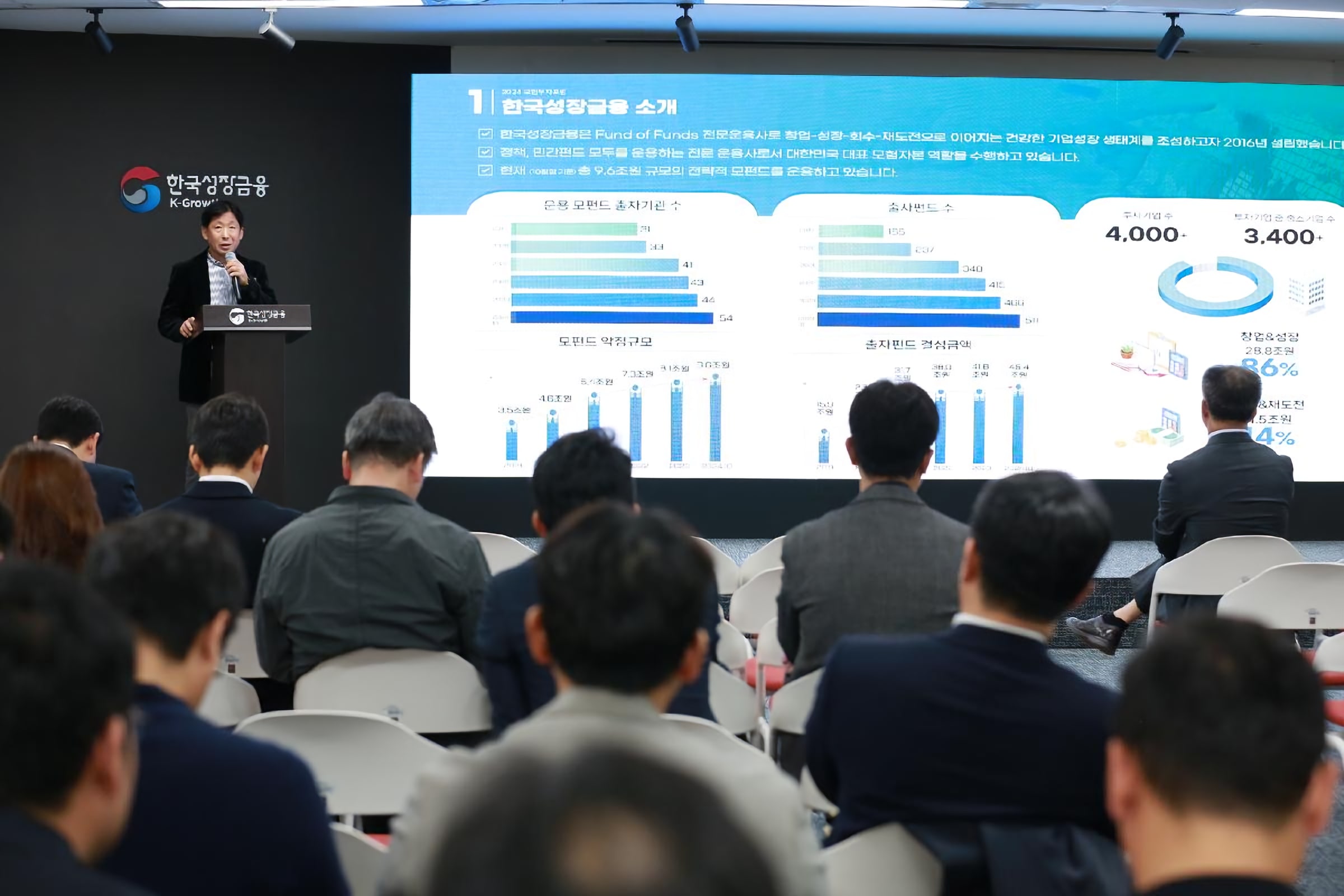
Korea Growth Finance announces 55 billion won K-content and media sector support participation, Dealsite reported.
55 Billion Won's Actual Scale
Korea Growth Finance announces 55 billion won K-content and media sector support participation, Dealsite reported. This number's significance exceeds the figure itself understanding operational mechanics proves more crucial. Korea Growth Finance's investment method comprises fund-of-funds structure. Rather than direct government investment, private fund managers' individual fund formation anchors LP participation through government. Managers match government capital with private funding creating actual funds. Matching ratios vary by project; typically government 1 to private 1-3. 55 billion government capital generates 110-220 billion actual operating funds.
K-Content Selection Rationale
Korea Growth Finance's K-content selection proves no accident. Three elements converge: proven global demand, policy alignment, and clear exit strategy. Netflix's global hit-content rankings consistently feature Korean works. K-pop maintains streaming platforms' non-English genre highest growth rates. Demand verification signals exist. 2026 content sector 27% budget increases, supplementary budget possibility mentions, and individual 200 billion IP funds plus 200 billion export funds clearly indicate government direction. Policy capital proves most efficiently deployed directionally aligned with government policy. Korea Growth Finance constitutes government policy execution entity.
Policy Capital's Market Impact
Most investors undervalue policy capital small scale, low returns, slow decision-making reasons cited. Yet understanding policy capital's role through market-making functionality reveals different importance. Three phenomena occur in policy capital-entering markets. First, minimum profitability guarantees. Anchor LP government capital presence ensures even worst-case scenarios achieve partial recovery. This lowers private capital loss floors. Second, industry credibility heightens. Government institution investment constitutes formal sector investment-viability certification. Institutional investors' internal approval processes value this certification. Third, subsequent capital attraction. Policy capital-preceded fields attract private capital. Lower-risk-appearing areas attract capital flows.
Cycle Structure: Priming Pump to Self-Generation
Policy capital's role proves non-permanent. It functions as priming pump. Pump-priming water allows subsequent natural water pressure extraction. Policy capital similarly: initial risk assumption and market-making enable private capital entry and success-case accumulation. Absent policy capital, markets self-generate. Where stands Korea's K-content investment market? Early stage of policy capital entry. Krafton's 1 billion won Black Label bet and J-Hope's MissenPlace Capital's K-culture fund formation signals global private capital awareness. Yet most institutional capital remains dormant. Policy capital formation and first successes generate subsequent waves.
Exit Strategy Visibility
Alternative investment's most crucial question: "How will we exit?" Difficult-exit markets lacking attractive returns fail. K-content investment's exit visibility: what emerges? First, IPO pathways. Korea equity markets favor K-pop label and content enterprise IPOs. SM, JYP, YG, HYBE successes prove subsequent content company listing possibilities. Independent labels and small-content enterprises' IPO increases accelerate. Second, strategic M&A. Global entertainment (Universal, Sony, Warner), IT majors (Kakao, Naver, Krafton), overseas media groups increasingly pursue K-content M&A. Third, secondary markets. Maturing private equity secondary markets enable pre-maturity LP interest sale to different investors.
The Catalytic Role of Policy Capital in Content Markets
Korea Growth Finance's targeted capital injection serves as the ultimate market-maker, significantly lowering the risk threshold for private institutional entry. By validating the K-content sector with sovereign-backed funding, the government is actively engineering the early stages of a robust secondary market and expanding IPO pathways, laying the groundwork for explosive, self-sustaining ecosystem growth.