DSML Market Views Article
SK hynix Stops Solidigm's IPO Review While Customers Sign Longer Memory Deals
Kwak Noh-Jung stops Solidigm's IPO review as memory sales rise; Rebellions builds a rack-level offer, LG installs alternative inference hardware, and NAVER takes office delivery robots into a Tokyo building.
Kwak Changes the Capital Plan as Customers Commit to Memory
On 28 January 2026, SK hynix paired its record 2025 results with an additional KRW 1 trillion dividend. Revenue had reached KRW 97.1467 trillion and operating profit KRW 47.2063 trillion, both preliminary at that announcement. Song Hyun Jong, president and head of the corporate centre, described balancing investment, financial stability and shareholder returns. HBM revenue had more than doubled, alongside contributions from conventional server memory and enterprise storage.
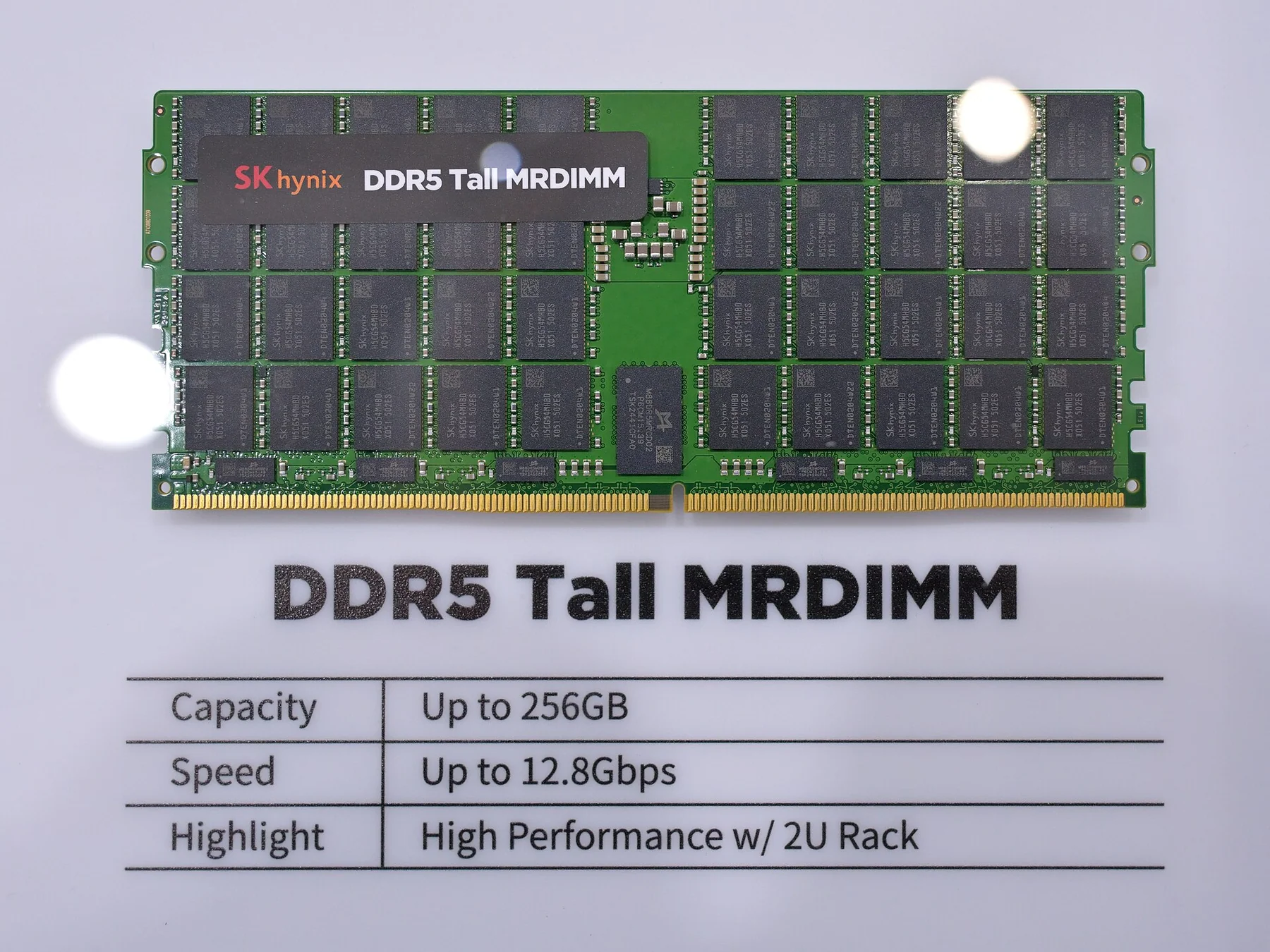
The customer relationship was changing too. In July, SK hynix reported long-term agreements with around ten customers and quarterly operating profit of KRW 60.5426 trillion. Its HBM4 mass shipments had begun in the second quarter. By 28 October, the company said fourteen major customers had signed agreements covering more than half its production capacity for 2027 and 2028. Customer commitments were extending well beyond the next shipment.
Chief executive Kwak Noh-Jung used the October presentation to explain another decision: the company had stopped reviewing an IPO for Solidigm. It had considered the listing to help finance production expansion, but concluded that market conditions would not support its intended outcome. Kwak also set out plans to share gains from the Kioxia investment with shareholders. The memory boom was producing decisions about the organisation's next shape as well as its output.
Samsung's competing HBM4 decision arrived on 12 February. Sang Joon Hwang, head of memory development, explained its use of 1c DRAM and 4nm logic processes as commercial shipments began. The company had chosen newer manufacturing nodes instead of reusing established designs, coordinating memory, foundry and packaging capabilities around the component.
Samsung's 30 July results reported KRW 171.5 trillion of second-quarter group revenue. Its semiconductor division benefited from server demand and rising memory prices, while the device division's sales declined from the preceding quarter. Customers' spending on AI systems was changing the product mix inside these large manufacturers. Both Korean suppliers were extending production and customer relationships around that demand.
- SK hynix: preliminary FY2025 consolidated financial results
- Samsung Electronics: commercial HBM4 shipment announcement
- Samsung / Q2 2026 results and business commentary
- SK hynix / Q2 2026 preliminary results, HBM4 mass shipments and long-term agreements
- SK hynix / Q3 2026 results and Kwak Noh-Jung's investment decisions
A Washington Rule Changes Equipment Decisions in China
The production map also faced a specific political intervention. A US final rule published on 2 September 2025 removed Samsung China Semiconductor and SK hynix Semiconductor China, alongside Intel's Dalian operation, from the Validated End-User authorisation list. Effective from 31 December, the named facilities lost that route for obtaining eligible equipment and technology without individual export licences.
BIS's 29 August explanation said it intended to grant licences supporting existing operations, but not capacity expansion or technology upgrades. For manufacturers with plants in China, keeping a line running and modernising it consequently faced different policy treatment. The rule made location part of the next equipment decision, even as customers elsewhere were seeking additional supply. Export policy now shaped which parts of the production network could develop to meet that demand.
- BIS / China fab equipment licensing after VEU removal; operating versus expansion policy
- Federal Register / named China fab VEU removals, effective 31 December 2025
LG Opens EXAONE Access and Adopts Furiosa's Inference System
FuriosaAI's 22 July 2025 announcement brought an alternative AI system to a named installation. LG AI Research adopted RNGD after evaluating performance, energy use and software. Kijeong Jeon, its product-unit lead, described straightforward integration and operating cost as reasons for selection. Hardware was installed at LG's Koreit Tower data centre, with integration progressing from single cards to larger server configurations.
Furiosa reported a 2.25-times performance-per-watt advantage in LG's comparison with its tested GPU solution. The evaluation used EXAONE 3.5 models with 7.8 billion and 32 billion parameters and specified context windows. The integration subsequently covered EXAONE 4.0. The development was both a hardware choice and a collaboration on the software needed to serve those models.
LG had released EXAONE 4.0 on 15 July and opened a hosted commercial interface with FriendliAI, allowing developers to use it without supplying their own high-performance GPU. Its 32-billion- and 1.2-billion-parameter versions addressed different deployment settings. Downloadable weights carried research and educational permissions, with a separate agreement required for commercial use. LG was building several routes into the model: a hosted service, licensed use and an installed inference system.
- FuriosaAI: LG adoption, installed RNGD hardware and EXAONE test conditions
- LG AI Research: EXAONE 4.0 release and commercial API announcement
- LG AI Research / EXAONE 4.0 32B Model Licence
Rebellions Raises Two Rounds While Moving Beyond the Chip
Rebellions' funding announcements accompanied a change in the unit it wanted to supply. Its 30 September 2025 Series C raised USD 250 million, with Arm, Samsung Ventures and Pegatron VC participating. First-generation ATOM products were already deployed in several markets, according to the company. Chief financial officer Sungkyue Shin linked the round to REBEL-Quad production, a chiplet roadmap and international expansion.
On 30 March 2026, it announced another USD 400 million, led by Mirae Asset Financial Group and the Korea National Growth Fund. Together the two rounds supplied USD 650 million. Co-founder and chief executive Sunghyun Park placed software integration at the centre of the accompanying product offer, while Marshall Choy led the US expansion.
RebelRack packaged inference compute as a deployable rack; RebelPOD linked racks into a cluster. The software stack used Kubernetes and worked with tools including vLLM, PyTorch and Hugging Face. Rebellions was taking on more of the integration that a customer would otherwise have to assemble. The available product now extended from an accelerator into a system intended to fit a working data centre, with software compatibility central to Park's expansion strategy.
- Rebellions: Series C financing and reported deployment markets
- Rebellions: pre-IPO financing and RebelRack/RebelPOD announcement
NAVER's Robots Learn the Routines of a Tokyo Office Building
NAVER's established services supplied another route for AI. Its 7 August 2026 results showed second-quarter revenue up 16.2% to KRW 3.3888 trillion and operating profit down 0.2% to KRW 520.3 billion, with infrastructure investment among the pressures. Chief executive Choi Soo-yeon was adding AI to an existing advertising, commerce and payments operation. AI Briefing advertising, launched in late July, added a new format after the reported quarter.
Another application entered a much more physical routine. On 21 July, Mitsui Fudosan, NTT East and NAVER Cloud announced robot delivery at Tokyo Midtown Yaesu. Four robots connected five restaurant outlets on the basement and fifth floors with an office destination on the seventh. Workers ordered food and drinks through LINE, and restaurants prepared the orders for collection.
The service had to coordinate ordinary building infrastructure. Robots used a digital twin as a shared map and worked with security doors and lifts. Mitsui linked the service to facility operations; NTT East built and maintained the installation; NAVER supplied the robot-control and spatial technology. Changing a layout could be reflected in the cloud map, making facility management part of the service.
NAVER's 23 July account called this the first external commercial deployment of the operating model developed at its 1784 headquarters. Four years of route, sensor and service data informed the move into a conventional building. Its Japan business-development team worked with NAVER LABS' technology. The export was therefore an operating approach, assembled with local partners around restaurants, office users and the building they shared.
- NAVER / Q2 2026 results, advertising growth and late-July AI Briefing ads
- Mitsui Fudosan: joint Tokyo Midtown Yaesu robot-service scope and roles
- NAVER: first external 1784-model deployment and local operating responsibilities
Ulsan's Industrial Resources Become Part of a Cloud Proposal
At the 20 June 2025 signing for the Ulsan AI Zone, SK chairman Chey Tae-won and AWS infrastructure vice-president Prasad Kalyanaraman backed a fifteen-year partnership. The release two days later allocated construction to SK Group and the cloud-service zone to AWS, with operations expected in 2027. SK's local gas network, energy capabilities, sites and submarine-cable environment helped explain the choice of Ulsan.
The proposal brought the group's industrial businesses into computing infrastructure. The planned zone combined AI servers, networks and AWS services with the power and cooling required to run them. Chey described the project as a way for Korea to become an exporter of AI capabilities. A city long associated with manufacturing would supply physical resources for another kind of industrial operation.
Gasan offered an earlier operating reference. SK Telecom's February 2025 results confirmed that its data centre had opened with Lambda the previous December; its July account confirmed the December GPU-service launch. Alongside that existing service, Ulsan remained a construction project. Memory shipments, installed inference hardware, office deliveries and computing sites were connecting Korean capabilities to different everyday tasks, through organisations able to keep those tasks running.
- SK Telecom: SK Group and AWS Ulsan AI Zone agreement
- SK Telecom: dated confirmation of Gasan opening with Lambda
- SK Telecom: confirmation of December 2024 Gasan GPUaaS launch
The range of projects also reveals the work still ahead. Ulsan has a construction programme, Rebellions is expanding its system business, and NAVER's Tokyo deployment depends on local building partners. Their distinct operating responsibilities will shape the next phase alongside the memory companies' expanding customer agreements.
Primary Sources
- Bank of Korea / August 2026 Economic Outlook (2026-08-27)
- SK Telecom: SK Group and AWS Ulsan AI Zone agreement (2025-06-22)
- Samsung / Q2 2026 results and business commentary (2026-07-30)
- Samsung / manufacturing AI Megafactory plan (2025-10-31)