DSML Market Views Article
Samsung Wins CHIPS Award for Texas Expansion, With a 2027 Start Planned for Taylor
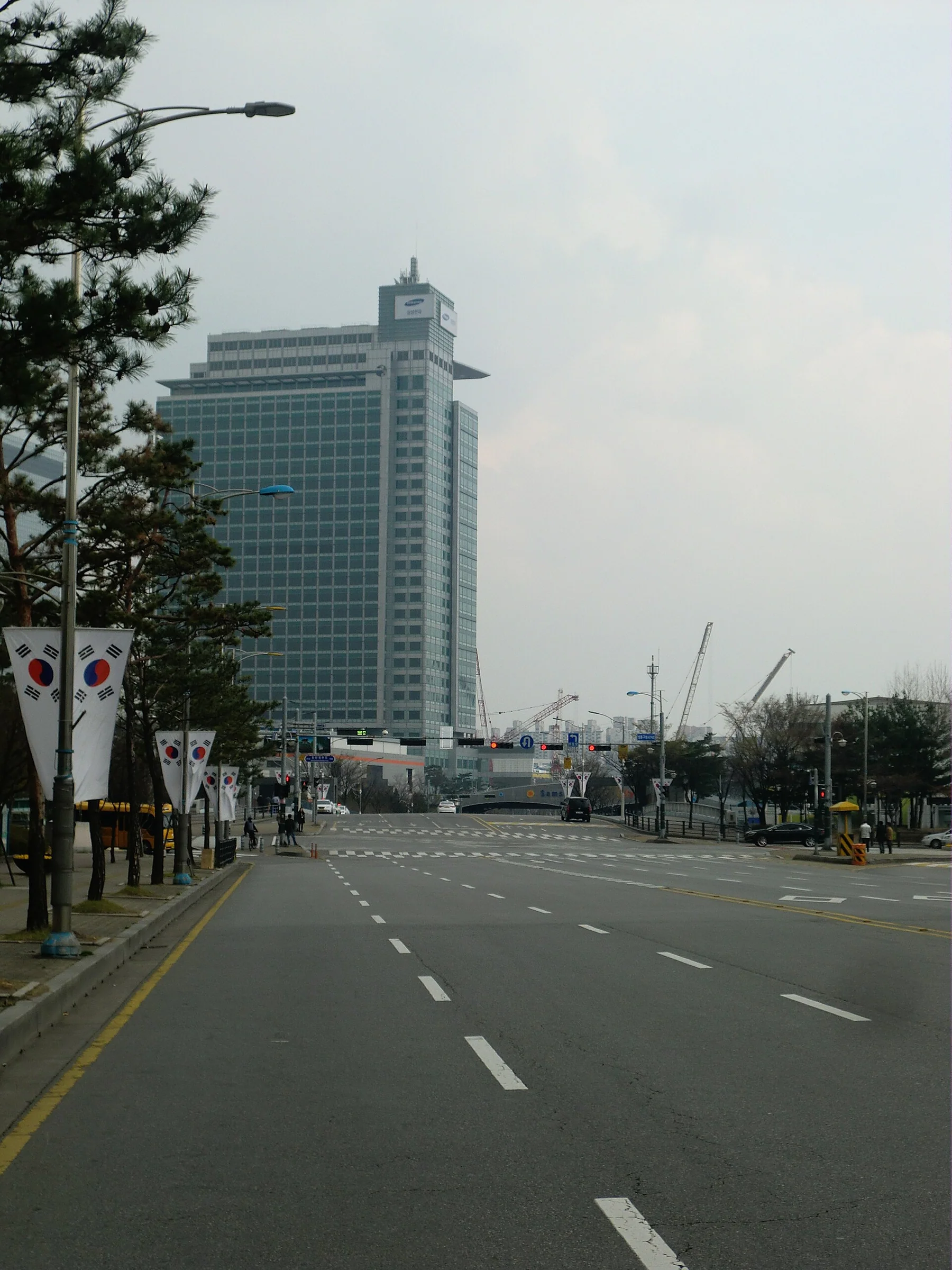
The Taylor plan grew from a factory near Austin into a federally supported semiconductor cluster. Local school partnerships and a later internship cohort show how Samsung's industrial commitment took shape beyond the award announcement.
The Federal Award Joined an Existing Texas Commitment
On 20 December 2024, the US Department of Commerce awarded Samsung Electronics up to USD 4.745 billion in direct CHIPS funding, supporting more than USD 37 billion of planned investment in Central Texas. Commerce secretary Gina Raimondo connected the award to American supply-chain security, advanced chips and regional jobs. Funds would follow construction, production and commercial milestones, linking the public contribution to the industrial programme.
Young Hyun Jun, then vice-chairman and chief executive of Samsung's Device Solutions division, described the agreement as another step in a relationship with American customers, partners and communities built over nearly three decades of semiconductor manufacturing. That business history was centred on Austin, the existing Texas operation to which Taylor would be connected.
Taylor Had Been Chosen Three Years Earlier
Samsung had announced the Taylor site in November 2021. The initial estimated investment was USD 17 billion, covering buildings, property improvements, machinery and equipment. Kinam Kim, then leading Device Solutions, linked the new facility to additional advanced-chip capacity and customer needs. Texas governor Greg Abbott welcomed the investment and prospective jobs.
The choice followed a review of US locations. Samsung identified the local semiconductor ecosystem, infrastructure stability, government support and community opportunities among its considerations. It also pointed to Taylor's proximity to its existing Austin site, about 25 kilometres away. Sharing infrastructure and resources gave the expansion an operating rationale beyond financial incentives. It connected a new investment to a manufacturing base the company already knew.
The Workforce Plan Started Locally
The 2021 announcement included financial support for a Samsung Skills Center in the Taylor Independent School District, with internships and recruitment opportunities. Samsung projected more than 2,000 direct high-technology jobs once the initial facility was fully operational. It was making workforce development part of the local commitment from the outset, alongside the buildings, machinery and equipment in the investment plan.
April Proposed a Larger Cluster
On 15 April 2024, Commerce announced non-binding preliminary terms for up to USD 6.4 billion in direct funding. The proposal envisaged more than USD 40 billion of private investment and a broader cluster: two leading-edge logic fabs, a research and development fab and an advanced-packaging facility in Taylor, plus expansion in Austin. Its size and perimeter differed from the original single-facility plan.
Raimondo presented the proposal as a way to strengthen American supply chains and technology leadership. Samsung's then Device Solutions chief Kye Hyun Kyung linked the wider ecosystem to expected American customer demand, including AI chips. The proposed Taylor programme combined manufacturing with work on future technologies, while Austin's expansion would serve markets including aerospace, defence and automotive. Public industrial policy and the company's customer strategy were meeting in the design of a regional cluster.
The Proposed Ecosystem Needed Colleges Too
The April proposal included up to USD 40 million for workforce development. It named an education network extending across Austin Community College, the University of Texas, Texas A&M, Texas State Technical College, Temple College and local school districts. Commerce also described work on affordable childcare access. These initiatives recognised that staffing a semiconductor cluster requires recruitment routes and the practical conditions that let people take those jobs.
The proposal connected these institutions to a specific range of work. Taylor would develop leading-edge logic, research and advanced packaging; Austin would extend its established manufacturing base. Samsung's school and college partnerships offered routes into the different skills those activities would require. Childcare planning addressed another part of recruitment and retention: whether workers could take and keep the jobs around which the expansion was being organised.
December Fixed the Award Around the Final Programme
The final award followed federal due diligence and set the direct-funding maximum at USD 4.745 billion against investment exceeding USD 37 billion. It listed two logic fabs and an R&D fab in Taylor and expansion in Austin. April's proposed package had also included an advanced-packaging facility, so the final announcement described a different scope as well as a different funding ceiling.
Commerce projected approximately 12,000 construction jobs and more than 3,500 manufacturing jobs over five years. Payment would follow project milestones, with financial and programme reporting. For Samsung, the award added federal support to a long construction and manufacturing commitment. For the government, the milestones connected that support to progress in the domestic semiconductor system it wanted built.
A Summer Internship Turned the School Partnership Into Work
The local education relationship had a visible sequel in July 2025. Samsung's fourth Taylor ISD cohort completed a paid six-week internship on 18 July, with 24 students assigned across the Austin and Taylor sites. Families, school representatives and local officials joined the closing ceremony.
Tessa Kopecky, a rising Taylor High School senior, described working with the Gas Chemical Systems team in Taylor. Employees had taken her into the field and helped her understand the systems behind the buildings. Eva Neill, a Legacy Early College graduate completing her second internship, had already secured a full-time environmental technician position. Her work had included inspections, water testing and research on zero-liquid-discharge systems.
These were particular routes into the industrial organisation, not simply a future job total. The internship connected the campus to young people already living in the community. For one participant it had become a job; for others it was experience of work they might choose to pursue.
Taylor's Next Stage Put People on the Campus
Samsung's 7 October 2026 account of the previous year's activity reported that the Taylor office building had opened to hundreds of employees in the fourth quarter of 2025 as construction continued. It also reported USD 5.9 million invested in workforce-development initiatives during 2025, including local university and college relationships. In that update, the company was targeting factory operations by the end of 2026, using EUV technology for 2nm chips. By 29 October, Samsung's quarterly results placed the start of operations at Taylor in its 2027 outlook.
The progression gives the award its commercial context. Taylor had been chosen for its connection to Austin and the surrounding industrial community; the school programme began creating routes into the workforce; the campus acquired an everyday working population. Federal support shared part of the capital commitment. The enduring task was building the regional organisation that could turn the factory plan into customer production.
- Samsung Austin Semiconductor / 2025 campus operations and workforce investment, 2026 operating target
- US Commerce / NIST final Samsung CHIPS incentives award
- Samsung / Taylor site selection, infrastructure and training plans
- Samsung Austin Semiconductor / fourth Taylor ISD cohort, named student work and technician appointment
- Samsung / 29 October 2026 results, Taylor commencement in the 2027 outlook
Related Company Research
Samsung Secures Up to USD 4.745 Billion for Texas Fabs Before Disclosing Tesla Contract
GSK Pays GBP 38.5 Million Upfront to Use ABL Bio's Brain-Delivery Technology
Rebellions and Marvell Plan Custom AI Systems for Asia-Pacific and the Middle East
Primary Sources
- DSML Holdings / public values; page has no publication date (Undated; publication date unavailable)
- ABL Bio / GSK agreement, 7 April release (2025-04-07)
- DSML Holdings / purpose, mission and operating capabilities; undated (Undated; publication date unavailable)
- DSML Holdings / business building, portfolio operations and preservation of autonomy (Undated; publication date unavailable)
- NIST / non-binding preliminary Samsung terms (2024-04-15)
- Samsung Austin Semiconductor / fourth Taylor ISD cohort, named student work and technician appointment (Undated page; cohort completed 2025-07-18)
- Samsung Austin Semiconductor / 2025 campus operations and workforce investment, 2026 operating target (2026-10-07; retrospectively describes Q4 2025 office opening)