DSML Market Views Article
What Korea's President Promised Wall Street Korea's Capital Market's Next Chapter
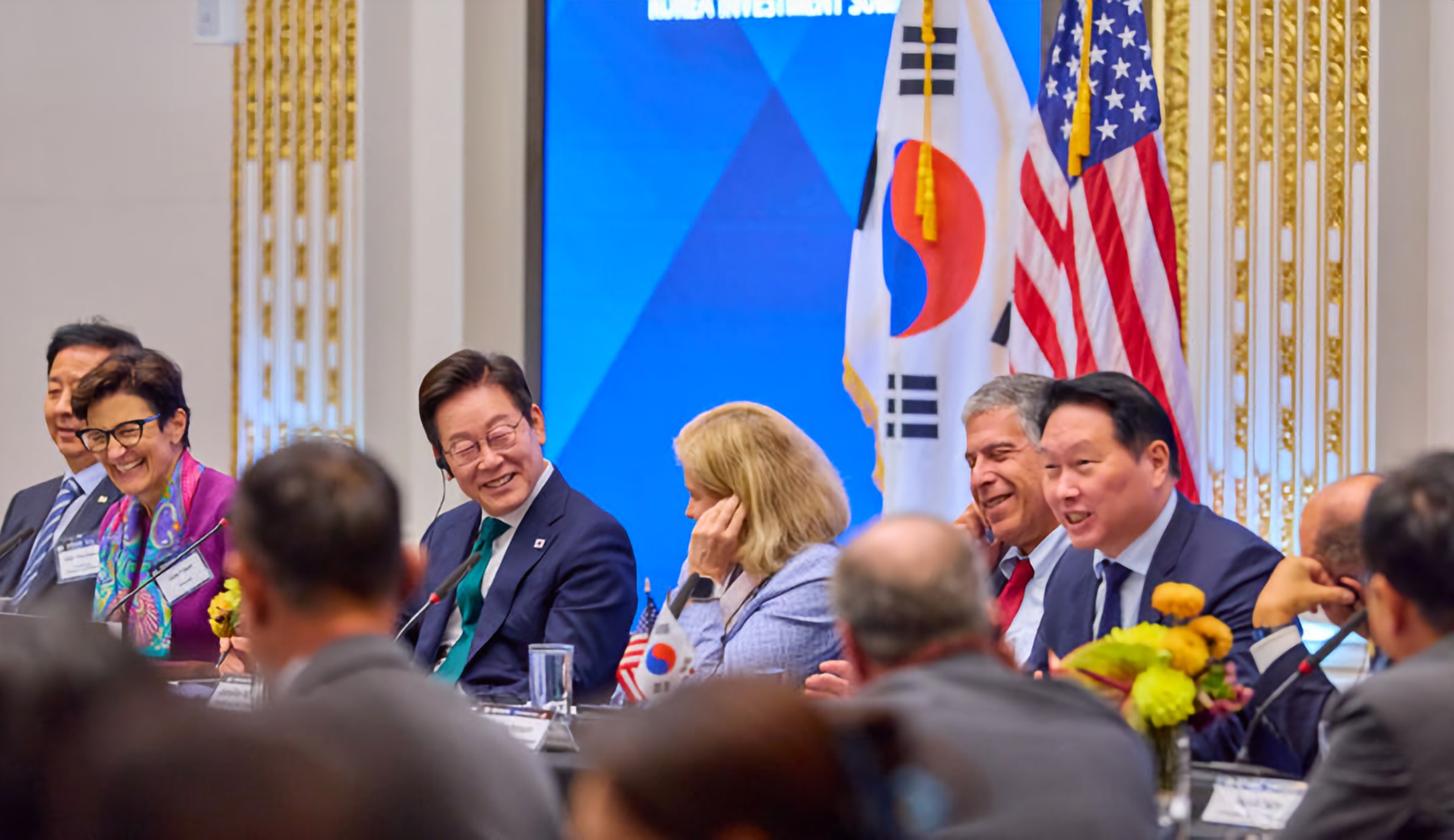
In 2026, President Lee Jae-myung met Wall Street foreign investors and chamber of commerce executives directly.
Signals from New York
In 2026, President Lee Jae-myung met Wall Street foreign investors and chamber of commerce executives directly. Four investment innovations received declaration: shareholder-centric corporate governance reform, market transparency enhancement, geopolitical risk mitigation, and industry restructuring centered on AI and renewable energy. The remarks' surface reads as diplomatic investment-attraction messaging. However, proper context understanding requires first addressing why the president traveled to New York personally. A Korean president directly addressing Wall Street institutional investors declaring domestic stock market undervaluation transcends investment attraction event. It constitutes political declaration from the nation's highest decision-maker accepting direct capital market reform responsibility. Korea's corporate governance chronic problems major shareholder-biased decision-making, opaque internal transactions, low dividend propensity now ascended to presidential direct reform agenda.
Korea Discount's Structural Causes
The Korean equity market historically suffered "Korea Discount" entrapment. Identical-fundamentals enterprises listing in US or Europe receive substantially higher valuations. Three primary reasons explain this. First, governance opacity. Korean conglomerate structures extensively feature minority ownership enabling complete subsidiary dominance through circular shareholding. This structure subordinates minority shareholder interests beneath owner interests structurally. Global institutional investors reflect this risk in discount rates. Second, cash distribution policy parsimony. Korean enterprises' dividend payout ratios substantially trail global averages. If profits do not reach shareholders, those profits represent mere ledger entries. Third, information asymmetry. Korean enterprises' IR (investor relations) standards trail US and Hong Kong-listed companies substantially. English disclosure absence, delayed earnings releases, analyst communication insufficiency create foreign investor access barriers. President Lee addressed all three from New York. Governance reform, market transparency, enhanced global investor communication. This constitutes policy direction shift rather than mere event critical to noting.
Japan's Previously Demonstrated Path
Japan comparison offers instructive precedent. Japanese stock markets experienced dramatic transformation beginning 2023 when Tokyo Stock Exchange formally required PBR (Price-to-Book Ratio) below 1x companies implement self-remedies. Expanded shareholder returns, non-core business divestment, board independence enhancement pursued simultaneously. Results proved decisive. Nikkei index set all-time records, surpassing 40,000 points for the first time since 1989 bubble's post-era aftermath. Warren Buffett's multi-trillion-won Japanese trading company investment proved no accident. Korea's presently traversed path structurally mirrors Japan's 2023. Government-led governance reform, capital market transparency enhancement, highest-level political will for foreign investment attraction. Should Korea's equity market correct 30-year discount in comparable two-year timeframe like Japan, it could accelerate further. Extant market infrastructure already exists; K-culture global familiarity now extends Korea brand awareness beyond Japan's contemporary reach.
Capital Market Reform's Culture Asset Spillover Effects
Governance reform and market transparency enhancement's direct beneficiaries comprise large-cap listed enterprises. Yet spillover effects extend far broader. Once institutional capital gains Korea market confidence, it invariably pursues "next opportunities." Following already adequately valued large-cap stocks, capital gravitates toward unlisted growth-stage enterprises. Korea's culture, content, and lifestyle sectors constitute "next opportunity" core candidates. K-pop labels, K-fashion brands, hanok-based luxury hospitality, Korea education export models most remain unlisted. As global institutional capital establishes Korea market trust, these assets' IPO and strategic M&A naturally accelerate. The president's New York promise addresses not just large-company shareholders. Korea's entire culture asset aggregate receives revaluation foundation within increasingly trustworthy capital market ecosystems.
AI and Renewable Energy: And Beyond
The president mentioned AI and renewable energy as future industrial axes in New York. This designates both short-term KOSPI beneficiary sectors and broader economy transformation direction. In AI and renewable energy-based economies, "soft power's" value intensifies. As digital conversion accelerates, assets based on human sensibility and culture gain AI-unreplaceable value. K-culture, by definition, comprises what AI cannot replicate. Min Hee-jin's aesthetics, Teddy Park's established musical language, Theo Yang's Korean traditional design while data-learnable, original value becomes rarer as AI advances. KOSPI's movement toward 5,000 or 6,000 AI and culture assets are not oppositional but mutually reinforcing.
Dismantling the Korea Discount Through Institutional Resolve
President Lee's direct engagement with Wall Street signals that corporate governance reform is now a matter of national strategic priority. If the government can enforce transparency and shareholder-centric policies mirroring Japan's successful overhaul, the subsequent repricing of Korean equities will unleash a tidal wave of institutional liquidity toward currently undervalued lifestyle and cultural assets.